
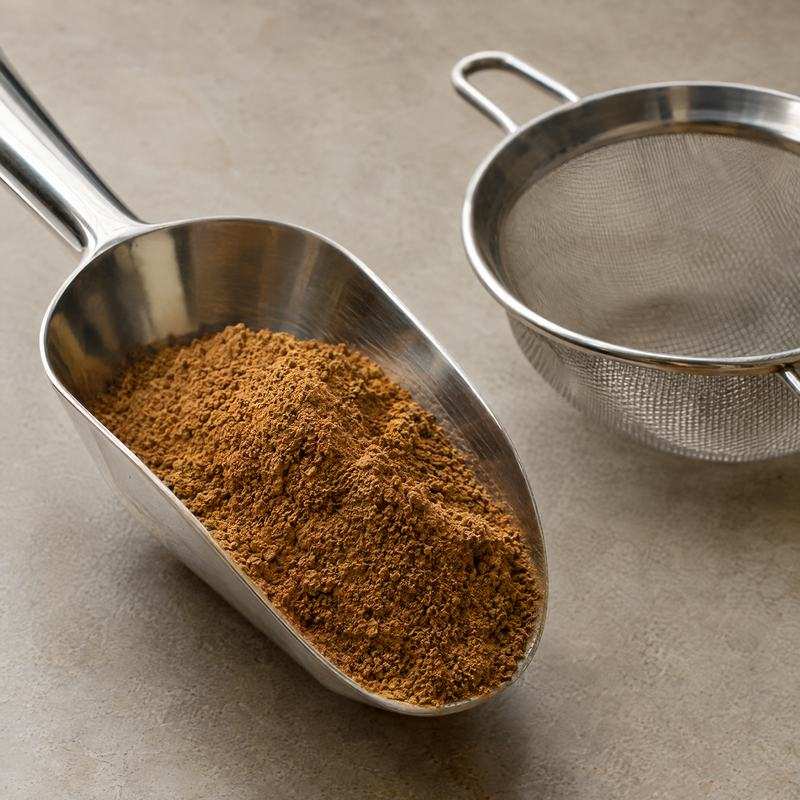
Leaf is graded by eye. Dust has no leaf structure left to look at, so it is graded by nicotine. A grade number is only a label until you know the method, the basis and the allowed spread behind it, and what type of dust it is.
The general guide to dust types, uses and handling is a separate article. This one stays with one question: how to buy dust by nicotine grade without being surprised by the lot.
Why dust is graded on nicotine
A grader can sort leaf by colour, body and stalk position. Dust is the fine fraction from threshing, screening and handling, and those cues are gone. What a buyer can still measure, and what changes the value, is nicotine. Fineness and cleanliness come next. That is why a dust price list reads as a ladder of nicotine percentages and not as a list of leaf grades.
The Indileaf ladder
Indileaf offers dust in three types: tobacco dust, stem dust and stalk dust. Tobacco dust is sold in six nicotine grades. For stem dust and stalk dust the nicotine grade is confirmed per enquiry.
| Line | Detail |
|---|---|
| Tobacco dust grades | 1.0%, 1.5%, 2.0%, 2.5%, 3.5%, 4.0% |
| Stem and stalk dust | Nicotine grade confirmed per enquiry |
| Types | Tobacco dust; stem dust; stalk dust |
| Sand | Typically below 0.5% |
| Sugar | Typically below 5% |
| Moisture | Not above 12% at loading |
| Packing | HDPE bags, 25-40 kg |
| Certificate of analysis | One per batch |
| Basis | Stated per lot, as-is or dry |
These are typical figures. The values that apply to a lot are the ones on its certificate. Dust grades are a separate ladder from the scrap nicotine blocks, so a dust grade and a scrap block should never be set side by side as if they were the same thing.
What a grade number means
A label such as "2.5" can mean several things. It may be a floor, with the lot at or above 2.5%. It may be a target, with lots landing a little either side. It may be the middle of a band. The three read very differently on a contract. Ask which one it is, and ask what happens when the arrival result is slightly under.
The steps on the ladder also matter. Here they run half a point apart up to 2.5%, and then a full point from 2.5% to 3.5%. If your process needs something in between, say so in the enquiry rather than rounding up or down in your head.
What a point of nicotine is worth
One percentage point of nicotine is 10 kg of nicotine in a tonne of material. Stepping from the 2.5% grade to the 3.5% grade adds 10 kg per tonne, which is 40% more contained nicotine (3.5 divided by 2.5). For an extractor that difference usually outweighs most of the other lines. For a reconstituted sheet maker it may matter less than sugars or particle size. Grade by the use, not by the highest number.
Basis changes the number
A 2.5% grade measured as received, on dust at 12% moisture, is about 2.84% on a dry basis (2.5 divided by 0.88). If your contract is on a dry basis and the supplier quotes as received, the dust looks weaker than it is. If it is the other way round, you are paying for water. Write the basis beside every nicotine figure. The article on dry basis and as-received reporting gives the conversion.
Type matters as much as grade
Two dusts at the same nicotine grade can behave differently in a plant. Tobacco dust comes mostly from lamina and carries the most nicotine of the three. Stem dust is more fibrous and runs lower. Stalk dust is woody, so confirm its nicotine lot by lot. Sand also rides with the fine fraction, so a dust at the right nicotine with high sand gives you less nicotine per tonne than the label suggests. Ask for the type, and ask for the sand limit as a number with a method.
Fineness has no single definition
There is no global size cut-off for dust. One patent describes tobacco dust as generally finer than about 60 mesh, and another defines fines as material passing a 0.28 mm screen (US 4421126; EP 0069467). Those are two different lines. If particle size matters to you, state the sieve and the fraction passing and retained, and do not rely on the word "fine".
Fine material settles in the bag
Dust stratifies. In a filled bag the finest material works down, and a sample taken from the top does not describe the bag. Agree how lots are sampled and how many bags are opened. The sampling guide has a template clause, and for dust the sealed, labelled retained sample is the part to insist on. Indileaf keeps a sealed retained sample for each lot.
A dust specification line
Write one line per grade, filled from your own requirements.
- Dust type and the nicotine grade, with whether the figure is a minimum, a target or a band.
- Nicotine method and basis, and the tolerance you accept.
- Moisture maximum, method and the point where it is measured.
- Sand as a maximum, with the method.
- Particle size by sieve.
- Packing: bag type, net weight, labelling.
- Certificate of analysis for each batch, and the referee laboratory if results differ.
Not sure which grade fits? The grade finder lines up nicotine targets with products, and you can request a sample to test against your own method.
Frequently asked questions
How is tobacco dust graded?
By nicotine content, with type, fineness and cleanliness agreed alongside. Dust has no leaf appearance to grade on, so the nicotine figure carries most of the commercial weight.
Is a nicotine grade a minimum or an average?
It depends on the supplier and the contract. Ask which it is, ask for the basis and method, and write the tolerance down before the first order.
Can I compare a dust grade with a scrap nicotine block?
Not number to number. They are separate ladders for different material, with different particle size and sand. Compare each against your own specification.