

Sourcing map
Where Indian tobacco grows, and which type comes from where
Ten main tobacco-growing states of India, and fifteen with minor or limited areas, with the types, districts and seasons that public sources document for each.
Explore the map
Select a state to see what it grows
Each main state shows its types, districts, season, uses and a trade note. Figures carry their year and publisher; where no published figure exists, none is shown.
- Main growing states (documented, numbered)
- Minor or limited tobacco areas (little or no detailed public data)
- Other states and territories (not listed)
- Major Indian container ports (orientation only)
Main growing states
Minor or limited tobacco areas
Select a state
Choose a state on the map or in the list
Each panel shows what public sources document for that state, with the publisher named.
Boundaries follow India's official external boundary as depicted by the Survey of India; the state map is drawn from open data (DataMeet India community, CC BY 4.0) and is for orientation, not for survey or legal use. Numbered markers sit at representative growing areas, not official centres. Figures are taken from the publishers named in each panel and describe the Indian crop in general, not Indileaf shipments. Ports are shown for orientation only.
We source through a farmer network of 1,500+ farmers.
The network figure moves with the season.
Origin
Gujarat: leaf from the Anand and Kheda belt
Middle Gujarat, around Anand and Kheda, is one of India's established tobacco districts, known for bidi tobacco, the Lal and Kala Chopadia chewing types and the Gadaku hookah type. Indileaf is based there, with its own plant in Gujarat.
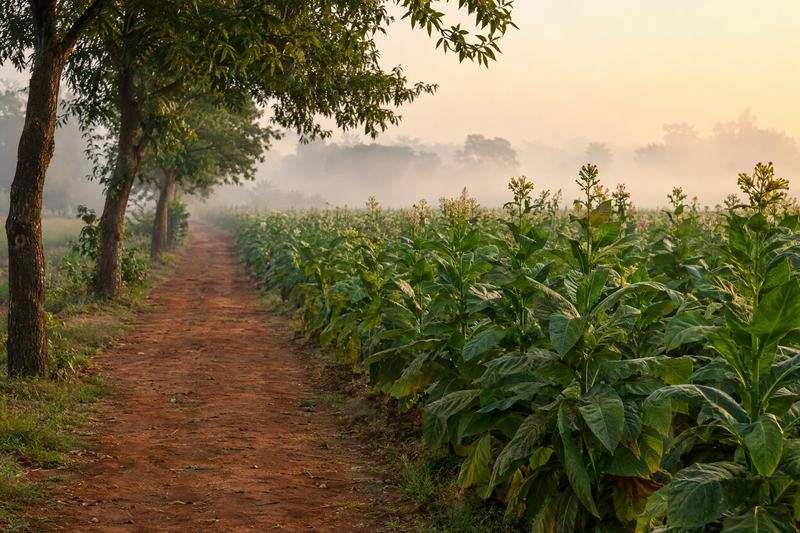
Our Gujarat leaf and scrap are sun-cured on open ground: the leaf is laid on the open ground to cure. They are higher in nicotine and lower in sugar than flue-cured Virginia, dark golden-brown in colour, with a neutral, earthy, woody aroma. In Gujarat the scrap is the product itself, not a by-product: sun-cured Nicotiana tabacum sold on nicotine block and mesh. Buyers who work on nicotine, such as extractors and makers of reconstituted sheet, often choose it for that reason.
Being in the belt, we work with buyers directly on grade, packing and sampling.
- Leaf and lamina. Gujarat leaf, sun-cured, offered by body: full, heavy, medium and light.
- Scrap. High-nicotine scrap is a product in its own right: sun-cured Nicotiana tabacum, offered in several mesh sizes and four nicotine blocks (Standard, Medium, High, Premium).
- Stems and dust. Stems are a by-product of threshing and processing, offered alongside; dust likewise is a by-product. Dust is offered in three types and six nicotine grades, with a certificate of analysis per batch.
The flue-cured south
Flue-cured Virginia from Andhra Pradesh and Karnataka
India's main flue-cured Virginia states. Burley and the fire-cured types below are available on request.
Flue-cured Virginia
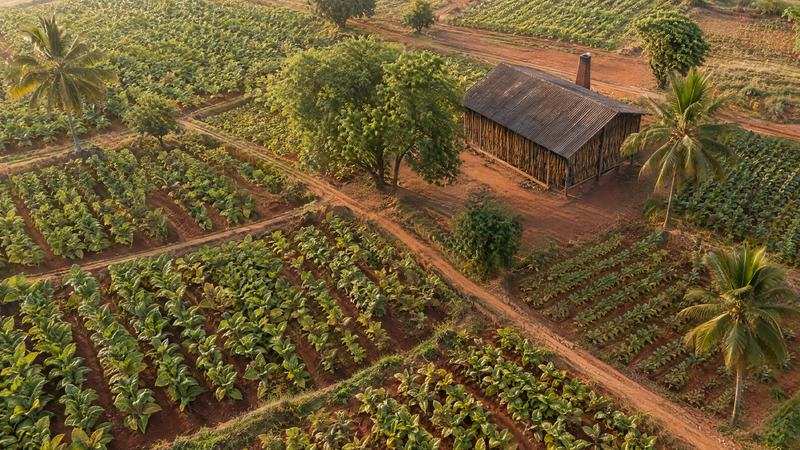
Heat-cured in barns and the classic cigarette-blend type. Grown on northern and southern light soils and southern black soils in Andhra Pradesh, and on the light soils of the Mysore belt in Karnataka. Offered as Mysore (Karnataka Light Soils) and NLS (Northern Light Soils) types.
Burley
Air-cured leaf for American-blend styles. Public sources name Andhra Pradesh, with Telangana and Karnataka in some references.
Fire-cured and country types
Dark fire-cured leaf for pipe, hookah and snuff, with local country types such as Natu and Lanka in the southern states.
Origin and range
What each of our origins offers
Typical values by origin; confirmed values travel with every lot and every sample.
| Origin | Offered | Nicotine | Sugar | Moisture at loading |
|---|---|---|---|---|
| Gujarat | Leaf, lamina, high-nicotine scrap, stems, dust | About 4.1-4.7%; scrap blocks from 1.0% to 5.5% | About 5-7% | Not above 12% |
| Andhra Pradesh (FCV) | Leaf, lamina; Burley and fire-cured | NLS up to about 3.6% | Confirmed per lot | Not above 12% |
| Karnataka (FCV) | Leaf, lamina; Mysore types | Mysore: ask us for figures | Confirmed per lot | Not above 12% |
Ranges vary by crop, grade and lot, and confirmed values accompany each lot. Gujarat scrap is a product in its own right, while stems and dust are by-products, offered alongside and confirmed per lot. See the product pages for full specification tables.
By state
The same map, state by state
The ten main states in table form, drawn from the same public sources, so that you can specify a type with more confidence.
| State | Main districts | Types grown (public sources) |
|---|---|---|
| Gujarat | Anand, Kheda (Charotar), Mahisagar, Vadodara, Panchmahal | Bidi tobacco (Keliu, Piliu, Gandiu; GT-7 and GT-9 varieties) (N. tabacum); Chewing types: Lal (red) Chopadia and Kala (black) Chopadia; Hookah type: Gadaku; Rustica (N. rustica) |
| Andhra Pradesh | Prakasam, Nellore, East and West Godavari, Krishna, Guntur. Natu: the Eluru and Kurnool areas. | Flue-cured Virginia (FCV), from the northern light, southern light, southern black and northern black soil regions (N. tabacum); Natu (Eluru and Kurnool) (N. tabacum); Burley, including HD Burley (N. tabacum); Lanka (N. tabacum); Cheroot tobacco (N. tabacum) |
| Karnataka | Mysuru, Hassan, Shimoga, Davangere, Kodagu, Chikkamagaluru, Chitradurga. Bidi: Belagavi. | Flue-cured Virginia, Karnataka Light Soils ('Mysore' style) (N. tabacum); Bidi tobacco (Nipani and Belagavi belt) (N. tabacum); Burley, in small areas (named in some references) (N. tabacum) |
| Telangana | Khammam, Karimnagar, Warangal (the Board uses the pre-2016 district names) | Flue-cured Virginia, Northern Black Soils style (rainfed) (N. tabacum) |
| Maharashtra | Gadchiroli; Kolhapur, Sangli, Satara | Flue-cured Virginia, Gadchiroli (central black soils type) (N. tabacum); Bidi tobacco (Kolhapur, Sangli and Satara, the Nipani tract) (N. tabacum); Pandharpuri, used to give strength to bidi tobacco (N. rustica) |
| Tamil Nadu | Madurai, Tiruchirapalli and Coimbatore; the Thanjavur coast for chewing types | Chewing tobacco (sun-, smoke- and pit-cured) (N. tabacum); Cigar filler and binder (N. tabacum); Cheroot tobacco (N. tabacum) |
| West Bengal | Cooch Behar (Dinhata), Jalpaiguri, Dinajpur, Malda, Murshidabad | Motihari (N. rustica); Jati (Chama, Podali, Bhengi) (N. tabacum (desi)); Cigar wrapper (N. tabacum) |
| Bihar | Muzaffarpur, Darbhanga, Purnia | Desi hookah and chewing types (Boari, Churia, Kaunia, Katali) (N. tabacum); Rustica, on low-lying heavy soils (N. rustica) |
| Uttar Pradesh | Farrukhabad (Kaimganj, Kampil), Etah, Mainpuri, Sitapur, Badaun, Moradabad | Hookah and chewing rustica (Calcuttia; Kampila varieties Hakra and Baonia) (N. rustica); Desi (Poorbi) chewing and hookah types (N. tabacum) |
| Odisha | Rayagada (FCV) | Flue-cured Virginia, Eastern Light Soils (Rayagada) (N. tabacum); Local natu, bidi, hookah and chewing types (named in older lists) |
Compiled from Tobacco Board, ICAR-NIRCA and Ministry of Agriculture and Farmers Welfare publications and supporting academic sources. The Ministry of Agriculture and Farmers Welfare groups every state other than Gujarat, Andhra Pradesh, Uttar Pradesh, Karnataka, West Bengal and Bihar under 'Others': 4.97 thousand ha, 1.4% of India's tobacco area, in 2020-21. Availability by region is confirmed per enquiry. See also the crop calendar.
Why it matters
Why the region matters to a specification
Soil, climate and curing decide a leaf's colour, aroma, body and nicotine character. A buyer who knows where a type comes from can specify it with more confidence and compare offers on equal terms.
Tell us the product, quantity and destination and we reply with options and a specification sheet. We can send a sample as well.
How to read the map. It is a schematic of public information. Positions are representative, and it states no volumes for any state.
FAQ
Questions about sourcing
Where does your tobacco come from?
Indileaf Ventures LLP is based in Gujarat, India. The map above shows where Indian tobacco types are grown, from public sources.
Can I ask for a specific region or type?
Yes. Send the type, region, grade and destination and we will say what we can offer. Burley, dark fire-cured and Natu types are available on request.
Does the map show your suppliers?
No. It maps public information on where Indian tobacco types are grown, so that you can specify and compare. Markers sit at representative growing areas.
Can I get a sample first?
Yes. Send the product, use and destination, and the sample goes out with a specification sheet. See quality parameters buyers should specify.
Tell us the type and the region
Email the product, quantity and destination to contact@indileaf.co, or phone +91 80001 50037, and we will reply with options and a specification sheet.