
Crop calendar
Where each Indian tobacco crop stands, month by month
A public agronomic calendar, region by region and month by month, for timing a sample or an order against the Indian crop.
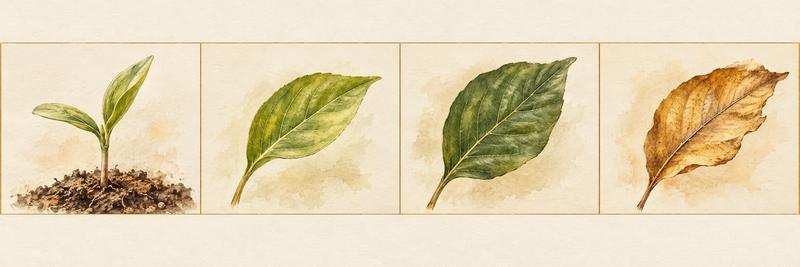
In short: Gujarat bidi tobacco is bought from farmers from February, Andhra Pradesh flue-cured Virginia sells from about March, and processed material follows the leaf.
What is happening now
What is happening now
Choose a month to see which regions are sowing, planting, harvesting, curing or selling. The view opens on the current month. Regions marked Our origins in the calendar below are in Gujarat, Andhra Pradesh and Karnataka, the states behind our range.
Loading the calendar…
The calendar
Every region and tobacco type, month by month
Each row is one region and tobacco type; 12 Indian regions and types are listed because soil belts and leaf types inside one state keep different seasons; the sourcing map shows the states themselves. Each cell carries a letter and a pattern as well as a colour. Hover, focus or tap a cell for detail, and use the arrow keys to move.
- Nursery / sowing
- Transplanting
- Harvest
- Curing
- Marketing / selling season
- Blank: no window listed
- Gujarat, Andhra Pradesh and Karnataka rows
Loading the calendar…
On a phone, scroll the grid sideways; the region column stays in place. Tap a cell for details.
Select any month or region to see its stage months here.
The interactive grid needs JavaScript and the data file. If you opened this page from a file on disk, serve it from a web server, or read the plain table below.
| Region and type | Nursery | Transplanting | Harvest | Curing | Marketing |
|---|---|---|---|---|---|
| Northern Light Soils (NLS) Andhra Pradesh | Flue-cured Virginia | – | Sep to Oct | Dec to Feb | – | Mar to Aug |
| Southern Light Soils (SLS) Andhra Pradesh | Flue-cured Virginia | – | Sep to Oct | Dec to Jan | – | Mar to Aug |
| Southern Black Soils (SBS) Andhra Pradesh | Flue-cured Virginia | Aug to Sep | Oct to Nov | Dec to Feb | – | Mar to Aug |
| Northern Black Soils (NBS) Telangana / Andhra Pradesh | Flue-cured Virginia | – | Oct | Dec to Feb | – | Mar to Aug |
| Central Black Soils (CBS) Andhra Pradesh / Maharashtra | Flue-cured Virginia | – | Oct to Nov | Dec to Feb | – | – |
| Karnataka light soils (Mysore belt) Karnataka | Flue-cured Virginia | – | Apr to May | Jul to Sep | – | Sep to Apr |
| Bidi tobacco (middle Gujarat: Kheda, Anand, Mahisagar, Vadodara) Gujarat | Bidi | Jun to Jul | Aug to Nov | Jan to Feb | – | Feb to May |
| Chewing, hookah and rustica types (Gujarat) Gujarat | Chewing / hookah / rustica | Jun to Aug | Sep to Nov | – | – | – |
| Bidi tobacco (Nipani belt) Karnataka / Maharashtra | Bidi | Jun to Jul | – | Jan to Feb | – | – |
| Chewing tobacco Tamil Nadu | Chewing | Aug to Sep | Sep to Nov | – | – | Jun to Aug |
| Cigar and cheroot types Tamil Nadu | Cigar / cheroot | Aug to Sep | Nov to Dec | – | – | Jun to Aug |
| Hookah and rustica tobacco Uttar Pradesh / Bihar / West Bengal | Hookah / rustica | Aug to Oct | – | May to Jun | – | – |
Typical windows, by region and type; actual dates vary by season.
How the year runs
Three rhythms set the Indian crop year
Planting, harvest and sale follow the monsoon and the type of leaf. Knowing which rhythm a grade belongs to is most of what it takes to read the calendar.
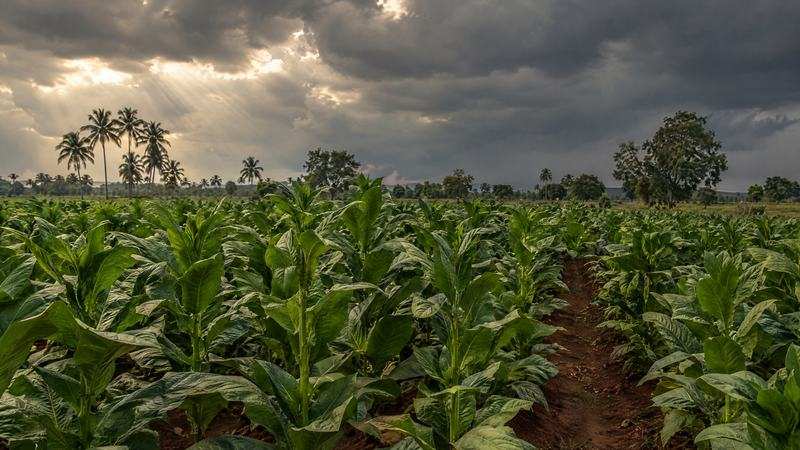
Flue-cured Virginia (FCV)
Grown mainly in Andhra Pradesh and Karnataka, with the Tobacco Board listing soil regions in Telangana as well. Karnataka is a monsoon (kharif) crop, planted from late April to May and harvested from July. Andhra Pradesh grows a winter (rabi) crop, planted from September to November and harvested from December. Tobacco Board season reports show Karnataka sales opening in September or October and Andhra Pradesh sales opening in February or March.
Tamil Nadu cigar, cheroot and chewing types
The Tobacco Board lists Tamil Nadu chewing leaf as planted in October and November and cheroot leaf in November and December, with marketing for both from June to August. The two have no calendar in common with Gujarat or the FCV states.
Gujarat bidi and the other winter types
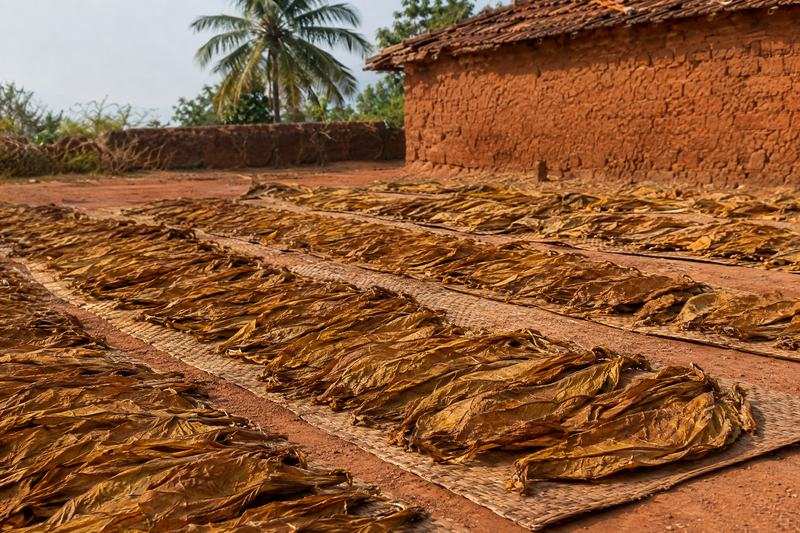
Bidi tobacco in middle Gujarat is sown in the monsoon, transplanted from August or September to November and harvested in January and February. FAO describes farm purchase as starting in February and March, while the Tobacco Board lists marketing in April and May. Chewing, hookah and rustica types in Gujarat share the same transplanting window.
Which regions the grid covers, and which it leaves out
The grid covers the types and regions for which public sources give a usable window. Public sources describe Odisha (Pikka), Assam, Maharashtra (bidi), West Bengal and Bihar types, and local trade types such as Lal and Kala Chopadia and Gadaku, but give no type-specific calendar for them, so we do not draw one. If a state is missing from the grid or a stage is blank, ask us for the window; blank does not mean zero.
Read across the rows and a pattern appears: as one region closes its marketing season, another is often opening. Karnataka FCV sales open from September or October, Andhra Pradesh FCV from February or March, Gujarat bidi purchases from February, and Tamil Nadu chewing leaf from June. Reading two or three calendars together gives a fuller picture of the crop year than reading a single one.
Other originsIndia beside the world’s other crops
Brazil, Zimbabwe and Malawi sit in the Southern Hemisphere and the USA in the Northern Hemisphere, and India sits in the Northern Hemisphere with a monsoon-driven calendar. Set side by side on one grid, they show when new-crop leaf from each origin arrives.
Southern Hemisphere
Zimbabwe’s earliest sowing date is 1 June; its 2025 sales opened on 5 March and the 2026 season was scheduled to open on 4 March. Malawi’s 2025 season ran from 9 April to 29 August. Southern Brazil publishes a planting calendar, with Virginia planting from 1 May and burley from June or July in the 2026/27 crop, as reported by Brazilian trade press. All three plant in the second half of the year.
Northern Hemisphere
US flue-cured transplants are sown from mid-February to mid-March and set in the field in spring, with harvest running through July to September. US burley is set in May and June and harvested from August to September. India’s Karnataka crop follows a similar spring-to-summer rhythm, while Andhra Pradesh and Gujarat plant after the monsoon and harvest in winter.
Marketing months are not shown for Brazil or the USA, nor closing dates for Zimbabwe. Dates vary by year and district. For African selling seasons read African tobacco leaf origins compared, and see the origins on the sourcing map.
Plan your purchase
Leaf sells first and processed material follows
Leaf is sold in its marketing window. Lamina is made from that leaf, and in flue-cured Virginia the scrap, stems and dust arise as leaf is threshed, cleaned, sorted, graded and screened, so they follow the leaf calendar. Gujarat high-nicotine scrap is different: it is sun-cured Nicotiana tabacum and a product in its own right. Choose a region and type to see a planning window.
Processed material follows the leaf window by the time needed for threshing, cleaning, sorting and grading. The planner shows an allowance and does not describe what we hold.
| Product | Follows | Pattern | Planning tip |
|---|---|---|---|
| Leaf | Marketing season of each type | Reaches the market in the marketing window of its region, which differs by type and state. | Send your type and month; we reply with current lots. |
| Lamina | Threshing after marketing | Made from marketed leaf after threshing, so it follows the leaf window. | Plan lamina orders behind the leaf window, not inside it. |
| High-impact scrap | Gujarat sun-cured crop | In Gujarat, scrap is the product itself, sun-cured Nicotiana tabacum sold on nicotine block and mesh, so it follows the Gujarat crop. FCV scrap is a by-product of threshing. | Tell us the nicotine block, mesh and quantity you need. |
| Stems | Threshing | Always a by-product of threshing and processing, so it follows the leaf calendar. | Tell us the form and quantity you need. |
| Dust | Processing | Arises in cleaning and screening, so it follows the same cycle. | Ask for the specification sheet. |
Six steps through a buying year
- Name the type and region. Each type keeps its own calendar and none substitutes for another.
- Find its marketing window in the calendar above.
- Add the processing allowance for the form you need: lamina, scrap, stems or dust.
- Ask for samples early, ahead of the window, so that approval does not hold up the order.
- Allow margin. A late or large crop can shift the window by weeks.
- Cover the gap before the next crop, with carry-over stock or a second origin.
Why processed material lags the leaf
Harvested leaf is cured and sold before it is threshed, cleaned, sorted and graded. FAO describes bidi tobacco, for example, as bought from farmers from February and March, with processed flake then stored for 6 to 12 months for ageing. Whatever the type, material made from a crop is not ready to ship on the day the crop is sold.
From field to marketThe crop cycle in five stages
Each stage has its own timing, and each bears differently on when material reaches a buyer.
| Stage | Timing | What happens | What it means for buyers |
|---|---|---|---|
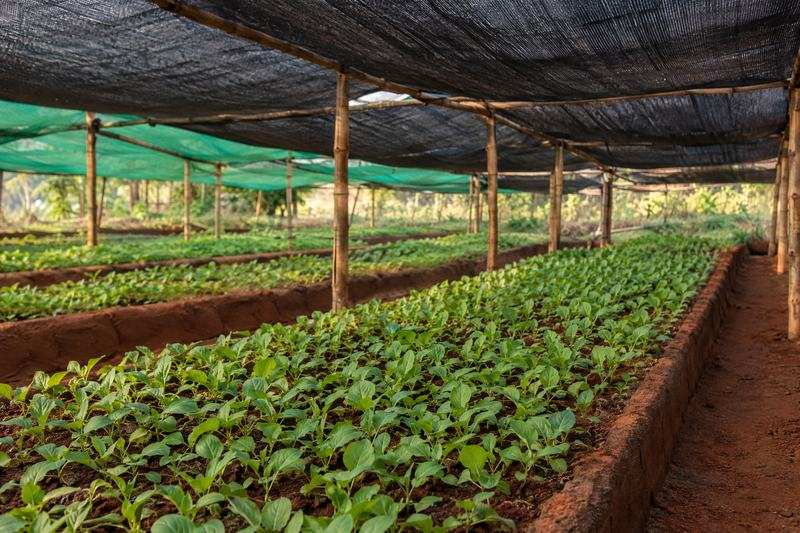
| Nursery / sowing (N) | 6 to 8 weeks before transplanting | Seed is raised in nursery beds. | Signals the coming crop; no leaf yet. |
| Transplanting (T) | Late April to May in Karnataka; September to November in Andhra Pradesh and Gujarat | Seedlings move to the field. | Sets the harvest window months ahead. |
| Harvest (H) | By type; public sources give 90 to 100 days after planting for cigar and cheroot types and 110 to 120 days for chewing types | Harvest method depends on type. | Start of the quality-defining period. |
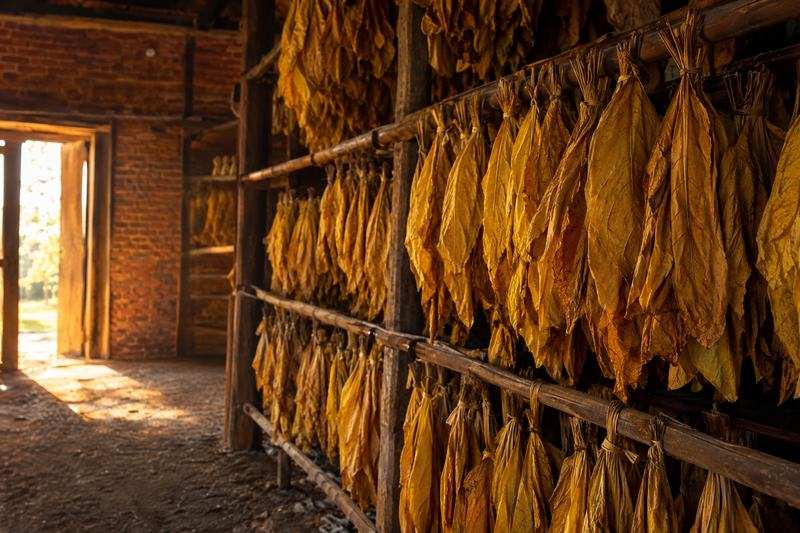
| Curing (C) | Varies by method and type; flue-cured leaf is cured alongside harvest | Flue, air, sun or fire curing, by type. | Determines colour, texture and character of the leaf. |
| Marketing (M) | Varies by type and region | Leaf is sold in each type’s selling season, then processed. | Material becomes available to move; processed forms follow. |
Timings vary with type, variety, rainfall and irrigation.
Questions buyers ask
Questions on reading the crop calendar
Are the months exact?
No. They are windows taken from public sources. Weather, variety, irrigation and crop size can move a season by weeks, and selling seasons sometimes run well past the usual close.
How do I read the grid?
Each row is one region and tobacco type, and each coloured cell is a month in which that stage falls. Select a cell or a row to see the stage months for that region.
Why are some cells blank?
For several types, public sources give a planting or harvest window but not every stage. We show the months that are published and leave the rest blank; ask us for the window you need.
When should I enquire?
Ahead of the marketing window for your type. An early enquiry leaves time to share samples and discuss what is possible.
How do scrap, stems and dust fit in?
Stems and dust are by-products of processing, so they follow the crop year. Gujarat high-nicotine scrap is a product in its own right, sun-cured Nicotiana tabacum, and follows the Gujarat crop. Our guide to dust covers its uses and specifications.
Where do you supply?
We supply business buyers worldwide from Gujarat, India. This calendar is a public agronomic guide and says nothing about stock on hand.
Sources
Sources
Publisher, document title and year for the windows shown in the calendar.
- Tobacco Board, Government of India. FCV soil regions, planting and harvest windows. Accessed October 2026.
- Tobacco Board, Government of India. FCV sales reports and season dates. Accessed October 2026.
- Tobacco Board, Government of India. Tamil Nadu chewing tobacco, planting and marketing seasons. Accessed October 2026.
- India Agronet. Tobacco, season table by type and state. Accessed October 2026.
- Protect Our Livelihood. Tobacco (sowing and transplanting windows by state). Accessed October 2026.
- Tamil Nadu Agricultural University. Tobacco (Nicotiana tabacum). Accessed October 2026.
- World Health Organization. Case study of tobacco cultivation and alternate crops in India. 2007.
- FAO. Tobacco in India (Tobacco: Supply, demand and trade). Accessed October 2026.
- Indian Society of Agronomy. Evaluation of alternative cropping systems for bidi tobacco, Indian Journal of Agronomy 66(4). 2021.
- ProAgri. Zimbabwe’s tobacco farming calendar. Accessed October 2026.
- Agriculture Zimbabwe. Zimbabwe’s 2025 tobacco marketing season opens. 2025.
- Ecofin Agency. Zimbabwe to launch 2025/2026 tobacco marketing season on March 4. 2025/2026.
- Tobacco Control Commission, Malawi. 2025 marketing season opens (9 April). 2025.
- Tobacco Control Commission, Malawi. 2025 selling season closing (29 August). 2025.
- American Cancer Society. The economics of tobacco farming in Malawi (nursery and transplanting timing). Accessed October 2026.
- Gaz (Brazil). Safra 2026/27: calendario de plantio do tabaco no sul do Brasil. 2026/27.
- Revista Cultivar. Sul do Brasil inicia plantio de tabaco da safra 2026/27. 2026/27.
- North Carolina State University Extension. 2023 Flue-Cured Tobacco Guide. 2023.
- University of Kentucky Extension. Burley and Dark Tobacco Production Guide (ID-160). Accessed October 2026.
- Tobacco Board, Government of India. Bidi tobacco. Accessed October 2026.
- Tobacco Board, Government of India. Cheroot tobacco. Accessed October 2026.
Where sources differ, the calendar shows the Tobacco Board window or the widest range.
Timing an order against a crop
Give us the product and the month you need it, and we will reply with what is possible and a sample.