
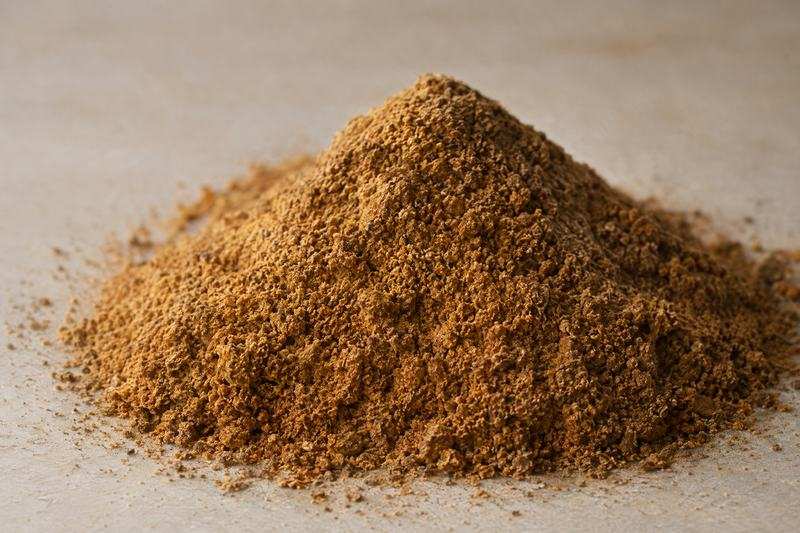
An extraction plant is buying contained nicotine, not tobacco by the kilogram. The feed specification therefore starts with the nicotine figure, the method and the basis behind it, and then sets limits on the things that cost the plant money: water, sand, foreign matter and particle size.
This is the plant buyer's view. It covers what changes the economics of an extraction line and how to qualify a feed before you commit volume. It is trade information only and gives no process recipe.
What the plant is really buying
At overview level, recovering nicotine from tobacco material is a solid-liquid extraction followed by separation and purification. Published work describes solvent extraction and intensified versions such as microwave-assisted extraction. Plants choose their own route. Whatever the route, the feed fixes three things before the process starts: the nicotine going in, the water that comes with it and the solids that must be handled afterwards.
So think in contained nicotine per tonne. The figures below are illustrative arithmetic, not Indileaf data or prices.
| Illustrative lot | Nicotine (as received) | Contained nicotine per tonne |
|---|---|---|
| A | 2.0% | 20 kg |
| B | 3.0% | 30 kg |
| C | 4.0% | 40 kg |
At the same delivered price per tonne, lot C holds twice the nicotine of lot A before any recovery loss. A buyer can pay more per tonne for richer feed and still pay less per kilogram of nicotine. The reverse also happens. A cheap lot with high sand and moisture is often the expensive one once you count what you cannot recover.
Where the feed comes from
Scrap, dust and stems are the by-product streams most often used. One peer-reviewed study of tobacco refuse reported nicotine of about 1.9 to 3.7% in scrap, 2.6 to 4.8% in dust and 0.9 to 1.8% in midrib, with leaf at 1.5 to 5.5% (PMC8303117). Those are research figures from particular samples. They are not commercial specifications, and your lots will not match them exactly.
In that study dust ran higher than scrap, but it is not a rule. Dust does tend to carry more sand and fines, which is why the highest percentage does not always win. A 3.5% dust with sand creeping up can cost you more than a cleaner 3.0% lot.
The same two products reach the market on different ladders. Indileaf sells tobacco dust in six nicotine grades from 1.0% to 4.0%, and scrap in four nicotine blocks from 1.0% to 5.5%. They are separate ladders. A dust grade and a scrap block should not be compared number to number, because the material, particle size and sand are different. The grade finder lists both by nicotine band.
The lines a feed specification needs
| Line | Why the plant cares | What to write |
|---|---|---|
| Nicotine | Sets contained nicotine per tonne | Minimum, method, basis |
| Moisture | Water is paid for by weight and affects storage | Maximum and method |
| Sand and ash | Inert mass with no nicotine; abrasive on equipment | Maximum and method |
| Foreign matter | Plastic, string, metal and stones damage equipment | Defined list, right to inspect |
| Particle size | Affects packing, solvent contact and handling | Sieve range, maximum fines |
| Consistency | Lets the plant hold settings and plan yield | Allowed spread between lots |
| Packing | Protects condition in transit | Bag type, liner, net weight |
The limits are yours to set. They depend on your process and on what your downstream customer asks for, so no numbers are suggested here.
Minimum nicotine and the basis
Extractors buy on a minimum, and the minimum should be stated on a dry basis. Water adds weight and no nicotine. As an example, a lot at 3.0% nicotine as received with 12% moisture is about 3.4% on a dry basis (3.0 divided by 0.88). If the contract says only "3%", the basis is open to argument and one side will lose it. The dry basis article sets out the conversion in full.
Name the method too. CORESTA Recommended Method 85, for total alkaloids as nicotine by continuous-flow analysis, is one published method a contract can cite. Titration, continuous flow and gas chromatography can each be used, and their results will not always agree to the second decimal.
Indileaf's own limit for moisture is not above 12% at loading, and the nicotine basis is stated per lot. Dust is packed in HDPE bags, and extraction feedstock is offered in fine to very fine particle sizes on a minimum-nicotine basis.
Feed is not finished nicotine
Pharmacopoeia monographs define the purity of finished nicotine, and that purity comes from purification and testing downstream. Raw tobacco does not reach it on its own. What the feed does change is the load on purification: a steady feed with few contaminants is easier to work than a variable one. Whether a given grade of nicotine may be used for a given purpose is a regulatory question for the market where it will be sold, and this article does not address it.
How to qualify a feed
- Write the specification from the table above, with method and basis on every chemistry line.
- Ask for a sample and its analysis, and ask which method and basis produced the figures.
- Test it in your own laboratory with your own method, using a retained split.
- Run a small trial to check yield and handling against the specification.
- Agree who samples commercial lots, how many increments are drawn and which laboratory settles a dispute.
- Check the first lots against your method before you commit volume, and repeat the check when the crop year changes.
Two cautions. Name the test method in the contract, and agree a tolerance and a referee laboratory in advance. And treat lot-to-lot consistency as a specification item in its own right. A plant that tunes its settings to one lot and then receives another pays for it in yield.
For dust lots, every batch has its own certificate of analysis, and a sealed retained sample is kept for each lot. A disputed result can be referred to an agreed third-party laboratory. To compare grades, open the grade finder, or request a sample and test it against your own method.
After extraction
Spent solids are a separate stream with their own rules and markets, which differ by country. Plan for them at the start. They affect the cost per kilogram of nicotine as much as the feed price does.
Frequently asked questions
What matters most when choosing feedstock for nicotine extraction?
Nicotine content, stated with its method and basis, comes first because it sets the contained nicotine per tonne. Moisture, sand, foreign matter, particle size and consistency between lots come next, since they change recovery, equipment wear and handling.
Why quote nicotine on a dry basis?
Water is paid for by weight but holds no nicotine. A lot at 3.0% as received and 12% moisture is about 3.4% on a dry basis. Without a stated basis, two lots cannot be compared fairly.
Is a good feedstock the same as a good nicotine grade?
No. Purity of the finished substance is defined by pharmacopoeia standards and depends on purification and testing downstream. Feed quality affects how demanding that work is, but it does not decide the grade.