
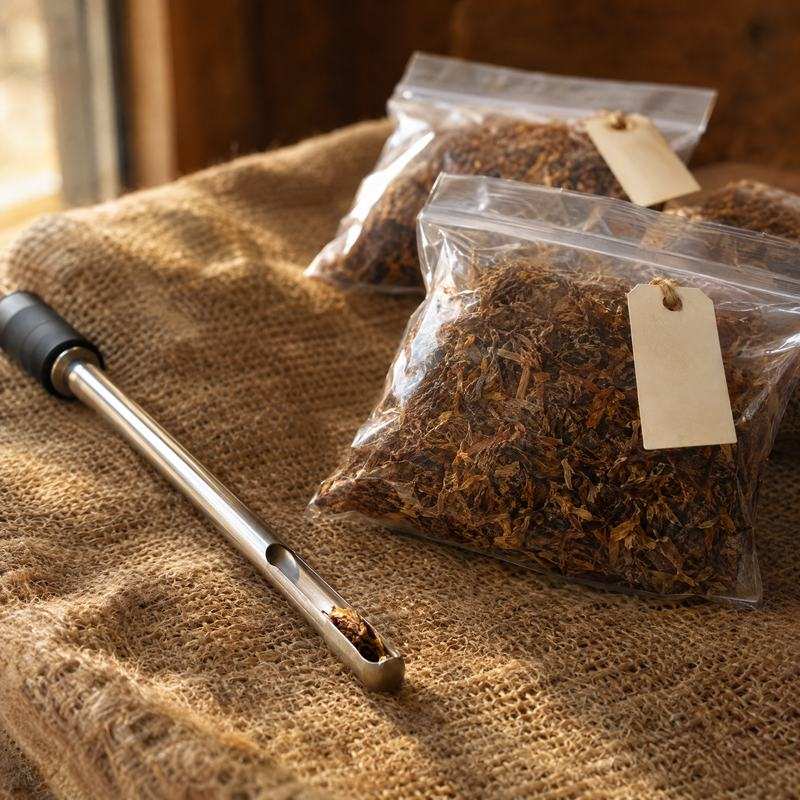
Ask a procurement team where quality disputes begin and many will say the laboratory; an experienced QA manager will more often say the sample. A laboratory result describes only the material that reached the bench, so the sample has to represent the lot.
This guide explains how representative samples of tobacco leaf, scrap, stems and dust are taken, and how to write sampling into a contract. The structure follows CORESTA Guide No. 13, "Guidance for Sampling the Tobacco Leaf Supply Chain". CORESTA describes it as a common approach to sampling at each stage of the supply chain, recording procedures in use that are considered effective and practical, together with the statistical theory that should underpin any sampling programme. CORESTA has issued more than one edition, so check the current one on its website. It is guidance with no legal force, so agree your own plan by contract.
Why sampling decides outcomes
A lot is a population, and a sample is a sub-group of it taken at random. Leaf lots vary between bales and within a bale: the outside of a bale dries or absorbs moisture differently from the centre, and bales packed at different times can differ. A sample drawn from one corner of one bale tells you about that corner.
Sampling also sets the limit on what you can claim. A well-run laboratory cannot repair a poor sample, and a precise method applied to an unrepresentative sample produces a precise wrong answer.
What is being sampled: bales, cartons, bags or loose
The right technique depends on the pack.
- Bales and cartons. Packed lamina and strips are usually sampled by drawing from several units chosen at random. Cartons and bales may be opened and inspected from different faces. Good practice is to vary the face you sample from, so that results do not depend on which side of the pack happened to be on top.
- Bags and loose scrap, stems and dust. These materials can stratify, with fines settling and larger pieces rising. Sampling should cut through the full depth of the container or take portions from a falling stream, not scoop from the top.
- Loose leaf. At a buying point, sub-samples may be taken as bundles (hands) from each bale, with leaves picked at random.
Core versus grab
A core (thief or probe) sample removes a column of material through the depth of the pack, so it samples outside and inside together. A grab sample is a handful taken from an exposed surface, quick but biased toward whatever is on top.
For cured leaf at the point of sale, the usual approach is to select bales at random and take a sub-sample from each with a core sampler. Where a core sampler cannot be used, or stem must be separated from lamina, a bundle can be taken from each bale and leaves picked from it at random. For moisture samples, take a cross-section of the bale rather than only the outside or inside, and agree the minimum sample weight with the laboratory and the method it uses.
Sample size and sub-sampling
Two layers are involved:
- Increments. Small portions taken from each selected unit.
- Composite. Increments combined and mixed into one sample for the lot or sampling unit.
From the composite, portions are prepared for each purpose: a laboratory sample, a retained sample and, if the contract calls for it, a party sample for the seller and buyer each. How large each portion needs to be depends on the tests, so the laboratory's method and the supplier's grade should drive the minimum.
The number of units sampled matters too. Industry guidance describes drawing samples as a statistical proportion according to the size of the lot and the risk level of the consignment, with more samples for some analyses (such as physical inspection) than others. ISO 2859-1 is a generic acceptance-sampling standard and not a tobacco one. It specifies single, double and multiple plans indexed by acceptance quality limit for lot-by-lot inspection, and can help set a sampling plan, though many commercial contracts simply define a fixed percentage of units.
Sealing, labelling and chain of custody
Moisture and contamination can change a sample quickly. Good practice is to guard against contamination, especially from other tobaccos: use clean working surfaces, clean tools between samples, and seal and label samples so they are clearly identified. Keep an unopened retained sample, often called the virgin sample, in case a re-test is required, and check any legal or customer retention requirements before disposal.
A simple chain-of-custody record should show:
- who drew the sample, when and where
- which bales or bags, by number
- the seal identifiers
- who handled it and how it travelled
- when it reached the laboratory
Seller, buyer and third-party samples
Three arrangements are common.
| Arrangement | How it works | Use |
|---|---|---|
| Seller sample | Seller draws and sends, buyer approves | Pre-shipment approval, offer samples |
| Joint sample | Both parties witness sampling and seal duplicates | Loading or arrival, disputes |
| Third-party sample | Independent inspector samples and seals | Higher-value lots, new relationships |
A pre-shipment sample approved by the buyer is a reference for the lot, but it only helps if the shipped lot is sampled again against the same procedure.
Template sampling clause (adapt with your counsel)
"The lot shall be sampled at (loading / arrival) by (seller / buyer / independent inspector) in the presence of (both parties' representatives, where practicable). (x)% of units, selected at random, shall be sampled by (core sampler / hand sample), taking increments through the full depth of each unit. Increments shall be combined into a composite, mixed, and divided into (three) sealed, labelled portions: one for the laboratory, one for the seller and one retained unopened. Moisture samples shall be sealed airtight immediately. The referee laboratory is (name), using (method and basis). The result of the referee test governs unless it differs from the original result by more than (tolerance)."
Common sampling mistakes
- Sampling only the easy-to-reach bales near the door
- Taking increments from the outside of the pack
- Leaving moisture samples in open containers
- Failing to number the bales sampled
- No retained sample
- Different parties using different sampling methods and comparing results anyway
- Not defining whether the sample is taken at origin or on arrival
Frequently asked questions
How many bales should be sampled?
There is no single number. Industry guidance describes drawing a statistical proportion according to lot size and the risk level of the consignment, and drawing more samples for some tests than others. Agree the plan before shipment.
Can the buyer appoint an independent inspector?
Yes, if the contract provides for it. Many contracts name an inspection company or a referee laboratory and say whose result governs in a dispute.